
Endocytosis and Exocytosis
Endocytosis and Exocytosis : Cellular Transport Mechanisms
What is endocytosis and exocytosis? Understand the difference between endocytosis vs exocytosis, their biological roles, and view animations of these processes.
Cells constantly interact with their environment. They take in nutrients, remove waste, and communicate using specialized mechanisms called endocytosis and exocytosis. These are both active transport processes that involve vesicle formation and require energy.
Understanding these two key processes is fundamental to grasping how cells maintain internal balance and interact with their surroundings.
What Is Endocytosis?

Endocytosis is a process by which a cell actively engulfs substances from its external environment. This occurs through the inward folding of the cell membrane, forming a vesicle that transports the materials into the cytoplasm.
There are three major types of endocytosis:
- Phagocytosis “cell eating”; engulfing large particles or microorganisms.

- Pinocytosis “cell drinking”; ingestion of fluid and small molecules.

- Receptor-mediated endocytosis ; highly selective, using receptors to import specific molecules.

What Is Exocytosis?

Exocytosis is the process that enables a cell to export substances to the extracellular environment. Vesicles inside the cell fuse with the plasma membrane and release their contents outside.
This mechanism is essential for:
- Neurotransmitter release.
- Hormone secretion.
- Removal of waste or toxins.
Endocytosis vs Exocytosis : What Is the Difference?
If you're wondering what is the difference between endocytosis and exocytosis, here’s a direct comparison:
| Feature | Endocytosis | Exocytosis |
|---|---|---|
| Direction | Into the cell | Out of the cell |
| Function | Import nutrients, signaling molecules | Export waste, secretory products |
| Energy Requirement | Yes (active transport) | Yes (active transport) |
| Vesicle Formation | Membrane invaginates to form vesicle | Vesicle fuses with plasma membrane |
| Common Examples | LDL uptake, phagocytosis | Insulin secretion, synaptic signaling |
Both are vital for cell survival, communication, and homeostasis.
Endocytosis and Exocytosis Animation
Endocytosis is a general term for a group of processes that bring macromolecules, large particles, small molecules, and even small cells into the eukaryotic cell. There are three types of endocytosis: phagocytosis, pinocytosis, and receptor-mediated endocytosis. In all three, the plasma membrane invaginates (folds inward) around materials from the environment, forming a small pocket. The pocket deepens, forming a vesicle. This vesicle separates from the plasma membrane and migrates with its contents to the cell’s interior.
Exocytosis is the process by which materials packaged in vesicles are secreted from a cell when the vesicle membrane fuses with the plasma membrane. The initial event in this process is the binding of a membrane protein protruding from the cytoplasmic side of the vesicle with a membrane protein on the cytoplasmic side of the target site on the plasma membrane. The phospholipid regions of the two membranes merge, and an opening to the outside of the cell develops. The contents of the vesicle are released to the environment, and the vesicle membrane is smoothly incorporated into the plasma membrane.
Types of Endocytosis
The two main categories of cellular transport are endocytosis and exocytosis, with endocytosis having further subtypes:
- Phagocytosis : used by immune cells to engulf foreign invaders.
- Pinocytosis : used for non-specific uptake of extracellular fluid.
- Receptor-mediated endocytosis : essential for precise molecular uptake like cholesterol.
These mechanisms allow for selective and non-selective internalization of substances from the environment.
Why Are Endocytosis and Exocytosis Important?
These processes are central to:
- Cell communication and signaling.
- Uptake of essential nutrients.
- Secretion of proteins and enzymes.
- Defense mechanisms (e.g., phagocytosis in immunity).
Whether importing or exporting, endo vs exocytosis defines how a cell manages interaction with its environment.
- Product
- Qty in Cart
- Quantity
- Price
- Subtotal
-

SIV Strip Kit
Simian Immunodeficiency Virus (SIV) is the most closely related lentivirus to Human Immunodeficiency Virus (HIV), therefore, SIV infection in monkeys has become the best animal model for studying the pathogenesis of and efficacy of vaccines against HIV...0801500/0801501Qty in Cart: 0Quantity:Price:Subtotal: -

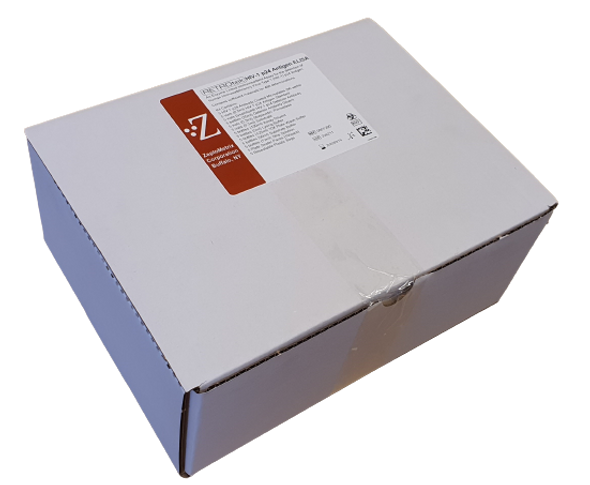
HIV-1 p24 Antigen ELISA 2.0
The RETRO-TEK HIV-1 p24 Antigen ELISA 2.0 is an enzyme linked immunoassay used to detect Human Immunodeficiency Virus Type 1 (HIV-1) p24 antigen in cell culture media. It can be used to monitor the purification and biochemical behavior of HIV-1 or...0801002/0801008Qty in Cart: 0Quantity:Price:Subtotal: -

Zika MR-766 Strips
Zika Virus (ZIKV) was first discovered from a Rhesus Monkey in the Zika forest of Uganda in 1947. More recently, there have been outbreaks in Southeast Asia, the Pacific Islands and the Americas. ZIKV has caused a global health concern since infections...801022Qty in Cart: 0Quantity:Price:Subtotal: -

Zika PRVABC59 Strips
Zika Virus (ZIKV) was first discovered from a Rhesus Monkey in the Zika forest of Uganda in 1947. More recently, there have been outbreaks in Southeast Asia, the Pacific Islands and the Americas. ZIKV has caused a global health concern since infections...801021Qty in Cart: 0Quantity:Price:Subtotal: -

SIV p27 Antigen ELISA
The RETRO-TEK SIV p27 Antigen ELISA is for research use only and is not intended for in vitro diagnostic use. The RETRO-TEK SIV p27 Antigen ELISA is an enzyme linked immunoassay used to detect Simian Immunodeficiency Virus (SIV) p27 antigen in research...0801169/0801201Qty in Cart: 0Quantity:Price:Subtotal: -


HIV-1 p24 Antigen ELISA
The RETRO-TEK HIV-1 p24 Antigen ELISA is supplied for research purposes only. It is not intended for use in the diagnosis or prognosis of disease, or for screening and may not be used as a confirmatory test in diagnostic situations. The RETRO-TEK HIV-1...0801111/0801200Qty in Cart: 0Quantity:Price:Subtotal: -

Rat IgG ELISA
The IMMUNO-TEK Rat IgG ELISA* Kit is a rapid, easy to use enzyme linked immunosorbent assay (ELISA) designed for the measurement of rat IgG in rat serum, plasma, saliva, mucosa, cell culture fluid from rat cells or other biological sample. The assay...801009Qty in Cart: 0Quantity:Price:Subtotal: -

Rabbit IgG ELISA
The IMMUNO-TEK Rabbit IgG ELISA Kit is a rapid, easy to use enzyme linked immunosorbent assay (ELISA) designed for the measurement of rabbit IgG in rabbit serum, plasma or other biological fluids. The assay contains ready-to-use reagents and takes less...801202Qty in Cart: 0Quantity:Price:Subtotal: -

Mouse IgM ELISA
The IMMUNO-TEK Mouse IgM ELISA Kit is a rapid, easy to use enzyme-linked immunosorbent assay (ELISA) designed for the measurement of mouse IgM in plasma, serum, hybridoma cell supernatants, ascites or other mouse biological fluids. The kit is especially...801181Qty in Cart: 0Quantity:Price:Subtotal: -

Mouse IgG ELISA
The IMMUNO-TEK Mouse IgG ELISA Kit is a rapid, easy to use enzyme-linked immunosorbent assay (ELISA) designed for the measurement of mouse IgG in plasma, serum, hybridoma cell supernatants, ascites or other mouse biological fluids. The kit is also useful...801180Qty in Cart: 0Quantity:Price:Subtotal: -

Human IgM ELISA
The IMMUNO-TEK Human IgM ELISA Kit is a rapid, easy to use enzyme-linked immunosorbent assay (ELISA) designed for the measurement of human IgM in serum, plasma, hybridoma cell supernatants, ascites or other biological fluids. The kit is especially useful...801183Qty in Cart: 0Quantity:Price:Subtotal: -

Human IgG ELISA
The IMMUNO-TEK Human IgG ELISA Kit is a rapid, easy to use enzyme-linked immunosorbent assay (ELISA) designed for the measurement of human IgG in serum, plasma, hybridoma cell supernatants, ascites or other biological fluids. The kit is especially useful...801182Qty in Cart: 0Quantity:Price:Subtotal: -

Human IgA ELISA
The IMMUNO-TEK Human IgA ELISA Kit is a rapid, easy to use enzyme-linked immunosorbent assay (ELISA) designed for the measurement of human IgA in serum, plasma, cell culture supernatants or other biological fluids. The assay contains ready-to-use...801197Qty in Cart: 0Quantity:Price:Subtotal: -

HTLV p19 Antigen ELISA
The RETRO-TEK HTLV p19 Antigen ELISA is supplied for research purposes only. It is not intended for use in the diagnosis or prognosis of disease, or for screening, and may not be used as a confirmatory test in diagnostic situations. The RETRO-TEK HTLV...801116Qty in Cart: 0Quantity:Price:Subtotal: -

Horse IgG ELISA
The IMMUNO-TEK Horse IgG ELISA Kit is a rapid, easy to use enzyme linked immunosorbent assay (ELISA) designed for the measurement of horse IgG in horse serum, plasma or other biological fluids. The assay contains ready-to-use reagents and takes less than...801221Qty in Cart: 0Quantity:Price:Subtotal: -

Guinea Pig IgG ELISA
The IMMUNO-TEK Guinea Pig IgG ELISA Kit is a rapid, easy to use enzyme-linked immunosorbent assay (ELISA) designed for the measurement of guinea pig IgG in plasma, serum, or other guinea pig biological fluids. The IMMUNO-TEK Guinea Pig IgG ELISA Kit is...801029Qty in Cart: 0Quantity:Price:Subtotal: -

Goat IgG ELISA
The IMMUNO-TEK Goat IgG ELISA Kit is a rapid, easy to use enzyme linked immunosorbent assay (ELISA* ) designed for the measurement of goat IgG in goat colostrum, milk, serum, plasma or other biological fluids. The assay contains ready-to-use reagents and...801223Qty in Cart: 0Quantity:Price:Subtotal: -

Chicken IgY ELISA
Chicken IgY is the designation for the IgG-like molecule found in avian species. The IMMUNOtek Chicken IgY (IgG) ELISA is a rapid, easy to use enzyme linked immunosorbent assay (ELISA) designed for the measurement of chicken IgY in chicken serum, egg...801010Qty in Cart: 0Quantity:Price:Subtotal: -

The IMMUNO-TEK Bovine IgG ELISA Kit | 801198
The IMMUNO-TEK Bovine IgG ELISA Kit is a rapid, easy to use enzyme linked immunosorbent assay (ELISA) designed for the measurement of bovine IgG in bovine colostrum, milk, serum, plasma or other biological fluids. The assay contains mostly ready-to-use...801198Qty in Cart: 0Quantity:Price:Subtotal: