
Butyric Acid and Butyrate: Structure, Production, Biological Functions and Uses
Butyric acid, also known as butanoic acid, is a four-carbon short-chain fatty acid with the molecular formula C₄H₈O₂. In biological systems, it is usually present in its ionized form, called butyrate. Butyrate is produced primarily when intestinal microorganisms ferment dietary fibers and resistant carbohydrates in the colon.
This microbial metabolite is scientifically important because colon epithelial cells can use it as an energy source. It also participates in gene regulation, intestinal-barrier maintenance and immune signaling. However, promising experimental findings should not be interpreted as proof that butyric acid or butyrate supplements can prevent or cure disease.
Key facts about butyric acid
| Common name : | Butyric acid |
| IUPAC name : | Butanoic acid |
| Molecular formula : | C₄H₈O₂ |
| Molecular weight : | Approximately 88.11 g/mol |
| Chemical class : | Saturated short-chain fatty acid |
| Conjugate base : | Butyrate |
| CAS number : | 107-92-6 |
| Physical appearance : | Colorless liquid |
| Characteristic odor : | Strong, penetrating and often described as rancid |
| Biological relevance : | Microbial metabolite and colonocyte energy substrate |
Concentrated butyric acid is a pungent chemical that can damage tissue and corrode certain materials. Its laboratory or industrial form should not be confused with the low concentrations of butyrate naturally produced in the intestine. Reference : PubChem
What is butyric acid?
Butyric acid is a saturated monocarboxylic acid containing four carbon atoms. Its condensed structural formula is : CH₃–CH₂–CH₂–COOH
Because it contains fewer than six carbon atoms, it is classified as a short-chain fatty acid, commonly abbreviated as SCFA.
At physiological pH, most butyric acid loses a proton and exists as the negatively charged butyrate ion : Butyric acid ⇌ butyrate + H⁺
For this reason, scientific articles frequently use “butyric acid” and “butyrate” in related contexts, although the terms do not describe exactly the same chemical form.
Butyric acid, butyrate and sodium butyrate
These names are closely related but should not be treated as interchangeable in every context.
| Butyric acid : | The protonated free-acid form |
| Butyrate : | The negatively charged conjugate base |
| Sodium butyrate : | The sodium salt of butyric acid |
| Calcium butyrate : | A calcium salt containing butyrate |
| Tributyrin : | A triglyceride containing three butyrate groups |
| Butanoate : | Systematic name for a butyrate salt or ester |
Sodium butyrate is frequently used in biological research because it is easier to formulate and handle than concentrated free butyric acid. It is also widely employed as an experimental histone deacetylase inhibitor.
Where does butyric acid come from?
Small amounts of butyric acid and its esters occur naturally in dairy fats and fermented foods. Its name originates from the Latin word associated with butter, reflecting its historical association with rancid butter.
However, the biologically relevant butyrate present in the human colon is produced mainly by microbial fermentation rather than by direct absorption of free butyric acid from food.
Microbial production in the colon
Dietary components that are not completely digested in the small intestine can reach the colon, where intestinal microorganisms ferment them. Important substrates include:
- Resistant starch
- Inulin and related fructans
- Arabinoxylans
- Pectins
- Beta-glucans
- Certain oligosaccharides
- Other fermentable dietary fibers
The simplified process is:
Dietary fiber → microbial fermentation → short-chain fatty acids → acetate, propionate and butyrate
The amount produced depends on the type of carbohydrate, intestinal transit, microbial composition, dietary pattern and interactions among different bacterial species.
Which bacteria produce butyric acid?
Butyrate is produced by several anaerobic intestinal bacteria through different metabolic pathways. Frequently studied butyrate-producing organisms include species associated with genera such as:
- Faecalibacterium

- Roseburia

- Eubacterium

- Anaerobutyricum
- Coprococcus

- Butyrivibrio

- Clostridium

Clostridium butyricum, for example, is named for its ability to produce butyric acid during carbohydrate fermentation.
Not every strain within a bacterial genus produces the same amount of butyrate. Microbial functions must therefore be evaluated at the species or strain level rather than inferred from the genus name alone.
How is butyrate produced by bacteria?
Many intestinal bacteria produce butyrate through a pathway involving acetyl coenzyme A.
A simplified biochemical sequence is :
Glucose → pyruvate → acetyl-CoA → acetoacetyl-CoA → butyryl-CoA → butyrate
The final conversion may occur through enzymes associated with:
- The butyryl-CoA : acetate CoA-transferase pathway
- The butyrate kinase pathway
Cross-feeding can also occur. One microorganism may release acetate, lactate or another intermediate that is subsequently converted into butyrate by another bacterial species. Butyrate production is therefore a community-level microbial process rather than the activity of a single organism.
Clostridium butyricum and Butyric Acid Production
Clostridium butyricum is a Gram-positive, spore-forming anaerobic bacterium found in environments such as soil and the intestinal microbiota of humans and animals. It is named for its ability to produce butyric acid, also called butyrate in its ionized form, during the fermentation of carbohydrates.
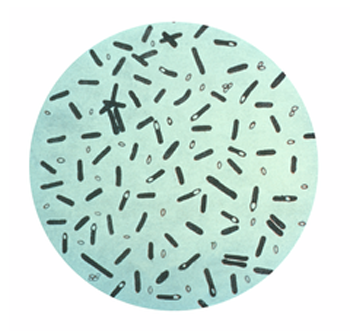
How does Clostridium butyricum produce butyric acid?
Under low-oxygen conditions, C. butyricum uses fermentable carbohydrates as an energy source. Sugars are first broken down through glycolysis to form pyruvate. Pyruvate is then converted into acetyl-CoA and subsequently processed through several metabolic intermediates, including acetoacetyl-CoA and butyryl-CoA.
A simplified production pathway is:
Glucose → Pyruvate → Acetyl-CoA → Acetoacetyl-CoA → Butyryl-CoA → Butyrate
The final conversion of butyryl-CoA into butyrate can involve enzymes such as phosphate butyryltransferase and butyrate kinase. During fermentation, the bacterium may also produce acetate, lactate, carbon dioxide and molecular hydrogen. The proportions of these products vary according to the bacterial strain, growth medium, substrate concentration, pH and culture conditions.

Why is butyrate production important?
Butyrate is a four-carbon short-chain fatty acid that serves as an important microbial metabolite in the colon. Intestinal epithelial cells can use butyrate as a local energy substrate, while researchers also study its effects on epithelial-barrier function, immune signaling and gene regulation.
The ability of C. butyricum to produce butyrate has therefore attracted interest in microbiome research, fermentation biotechnology and the development of selected probiotic strains. However, these characteristics are strain-specific. Findings obtained with one characterized strain should not automatically be applied to every C. butyricum isolate.
Factors affecting butyric acid production
Butyric acid yield is influenced by several fermentation parameters:
- The type and concentration of carbohydrate substrate
- Culture temperature and incubation time
- Medium pH
- Anaerobic conditions
- Nutrient availability
- Accumulation of fermentation products
- The metabolic characteristics of the selected strain
As butyric acid accumulates, the culture pH may decrease and eventually inhibit bacterial growth. Controlled fermentation systems can therefore use pH regulation, nutrient feeding or cell-recycling strategies to improve productivity. Experimental studies have shown that fed-batch approaches can provide higher butyric acid concentrations than conventional batch fermentation under suitable conditions.
Biotechnology applications
Because C. butyricum can convert renewable carbohydrate materials into organic acids, it has been investigated as a microbial production organism for:
- Butyric acid and butyrate salts
- Flavor and fragrance intermediates
- Butyrate esters
- Bio-based chemical manufacturing
- Hydrogen production
- Fermentation and microbiome research
The bacterium can metabolize different carbon sources, although performance depends heavily on the strain and fermentation process. Research has also explored its ability to convert glycerol into other commercially relevant metabolites, including 1,3-propanediol.
What acid does Clostridium butyricum produce?
=> Clostridium butyricum primarily produces butyric acid, which is present mainly as butyrate at physiological pH. It may also produce smaller or variable amounts of other fermentation products, including acetic acid and lactic acid.
What does butyrate do in the body?
1. It provides energy to colon cells :
Colonocytes—the epithelial cells lining the colon can oxidize butyrate in their mitochondria to produce energy.
An experimental study comparing conventional and germ-free mice found that colonocytes deprived of microbial butyrate showed reduced mitochondrial respiration and lower cellular energy availability. Adding butyrate restored mitochondrial activity in germ-free colonocytes, supporting its role as an important local energy substrate.
This does not mean butyrate is the only energy source used by intestinal cells. Its contribution varies according to diet, microbiota, epithelial condition and metabolic state.
2. It contributes to intestinal-barrier biology :
Butyrate metabolism influences epithelial oxygen consumption and intestinal homeostasis. Experimental studies have also connected butyrate exposure with changes in tight-junction proteins, mucus-related genes and epithelial-cell differentiation.
These mechanisms may help explain the scientific interest in butyrate for intestinal-barrier research. Most mechanistic findings, however, come from cell-culture or animal experiments and cannot automatically be translated into clinical treatment recommendations.
3. It influences gene expression :
Butyrate and sodium butyrate can inhibit certain histone deacetylases, or HDACs. These enzymes remove acetyl groups from histone proteins and influence how accessible particular DNA regions are to the transcriptional machinery.
By inhibiting HDAC activity, butyrate can alter histone acetylation and change the expression of selected genes. The effect depends strongly on:
- Butyrate concentration
- Duration of exposure
- Cell type
- Metabolic state
- Differentiation status
- Experimental conditions
Butyrate-mediated HDAC inhibition has been demonstrated in immune and epithelial-cell research, but its effects are not universally anti-inflammatory or beneficial in every biological context.
4. It participates in immune signaling
Butyrate can influence immune cells through intracellular metabolic effects, HDAC inhibition and signaling pathways involving short-chain-fatty-acid receptors.
A study using human intestinal immune cells found that butyrate modified lamina propria CD4 T-cell activity through HDAC inhibition and GPR43-related signaling. This illustrates that butyrate can regulate immune responses, but it also demonstrates that the outcome depends on the cell population and local environment.
Butyric acid and gut health
Butyrate is widely described as beneficial for intestinal health because of its relationship with colonocyte metabolism, epithelial signaling and microbial fermentation.
The strongest established concept is that microbially produced butyrate acts as an important metabolite within the colon. Claims that butyrate supplementation can independently cure digestive disorders are much less certain.
Research has investigated sodium butyrate in conditions such as :
- Ulcerative colitis
- Crohn’s disease
- Irritable bowel disorders
- Antibiotic-associated microbiome disruption
- Intestinal-barrier dysfunction
Some small clinical studies have reported potentially useful effects, while others have shown limited or variable results. Differences in formulation, dosage, disease severity, treatment duration and delivery to the colon make the evidence difficult to generalize. Butyrate should therefore be studied as a possible adjunct rather than presented as a replacement for established medical care.
Butyrate and colorectal cancer research
Butyrate has been extensively examined in colorectal cancer cell lines. In certain cancer cells, it can accumulate and inhibit HDAC activity, contributing to altered gene expression, cell-cycle arrest or apoptosis.
This phenomenon is sometimes called the butyrate paradox because normal colonocytes readily oxidize butyrate for energy, whereas some cancer cells rely more strongly on glucose fermentation and may metabolize butyrate differently.
These laboratory observations do not establish butyrate as a cancer treatment. Cell-culture concentrations, tumor biology and exposure conditions may differ substantially from what occurs in the human colon. Clinical evidence remains insufficient to recommend butyrate for cancer prevention or treatment.
Butyric acid foods
Foods do not usually supply the colon with the same quantity of butyrate that can be generated through microbial fermentation. A more practical nutritional strategy is to consume fermentable carbohydrates that intestinal bacteria can transform into short-chain fatty acids.
Potentially useful dietary sources include:
| Food category | Examples of fermentable substrates |
|---|---|
| Whole grains | Oats, barley and whole-grain wheat |
| Legumes | Lentils, chickpeas, beans and peas |
| Vegetables | Onions, leeks, asparagus and artichokes |
| Fruits | Apples, pears and slightly unripe bananas |
| Resistant-starch foods | Cooked and cooled potatoes, rice and pasta |
| Seeds and husks | Psyllium and flaxseed |
| Nuts | Almonds and other fiber-containing nuts |
Human dietary studies have shown that specific interventions can increase fecal butyrate, but responses vary considerably among individuals. A randomized study reported increased butyrate following almond consumption, while an earlier trial observed increased fecal butyrate following Plantago ovata seed administration.
Does eating butter increase intestinal butyrate?
Butter contains butyric acid within milk fat, but eating butter is not equivalent to producing butyrate through colonic fermentation.
Most dietary fat is absorbed before reaching the colon. By contrast, resistant starch and fermentable fiber reach colonic microorganisms and can be converted locally into butyrate. Therefore, consuming additional butter should not be presented as the primary method of supporting microbial butyrate production.
Butyric acid in laboratory research
Sodium butyrate is frequently used as a biochemical and cell-culture reagent. Common research applications include:
- Histone deacetylase inhibition
- Epigenetic-regulation studies
- Cellular-differentiation experiments
- Gene-expression analysis
- Intestinal epithelial-cell research
- Immune-cell signaling studies
- Cancer-cell proliferation experiments
- Recombinant-protein expression optimization
Results obtained with sodium butyrate are highly dependent on concentration and exposure time. Excessive concentrations may reduce proliferation, alter cell morphology or induce apoptosis. Each cell line therefore requires appropriate dose-response and viability controls.
Industrial uses of butyric acid
Butyric acid and butyrate derivatives are used in several industrial sectors.
Food and flavor chemistry
Although free butyric acid has a strong unpleasant odor, some butyrate esters have fruity or creamy aromas and can be used as flavoring or fragrance compounds.
Examples include:
- Ethyl butyrate
- Butyl butyrate
- Isoamyl butyrate
- Methyl butyrate
Animal nutrition
Protected butyrate salts and derivatives are investigated or used in animal-feed formulations. Their purpose may include modifying intestinal conditions, feed stability or animal performance. Safety and permitted uses depend on the formulation, species, concentration and applicable regulations. EFSA has evaluated butyric acid in the context of sensory feed additives under specified intended-use conditions.
Chemical synthesis
Butyric acid can serve as an intermediate in the production of:
- Butyrate esters
- Plasticizer components
- Pharmaceutical intermediates
- Fragrances
- Coatings
- Specialty chemicals
Is butyric acid dangerous?
The answer depends on its form and concentration.
Naturally produced intestinal butyrate is part of normal microbial metabolism. Concentrated laboratory-grade butyric acid is a hazardous chemical with a strong odor and corrosive or irritating properties. Direct contact can damage the skin, eyes and respiratory tract.
Laboratory handling should include appropriate:
- Gloves
- Protective eyewear
- Ventilation or a fume hood
- Chemical-resistant storage
- Spill-management procedures
- Safety-data-sheet review
Food-grade additives, laboratory reagents and dietary supplements are not interchangeable.
Butyrate supplements
Commercial preparations may contain sodium butyrate, calcium butyrate, magnesium butyrate or tributyrin. Formulations may differ in odor, stability and where the compound is released in the digestive tract.
Clinical evidence is not yet sufficient to conclude that these supplements provide the same effects for every person or medical condition. Possible tolerability issues may include gastrointestinal discomfort, bloating, nausea or changes in bowel habits.
People receiving treatment for gastrointestinal, metabolic or inflammatory disease should not replace prescribed therapy with a butyrate supplement without professional medical guidance.
Indole-3-Butyric Acid (IBA) Products
Choose between IBA powder, sterile IBA solution and non-sterile IBA solution for plant tissue culture, rooting and callus formation workflows.

Indole-3-Butyric Acid (IBA) Powder : View Product
Flexible powder format for preparing custom stock solutions and plant tissue culture media.
- Catalog: CN-I002
- Format: Powder
- Sizes: 1 g to 25 kg
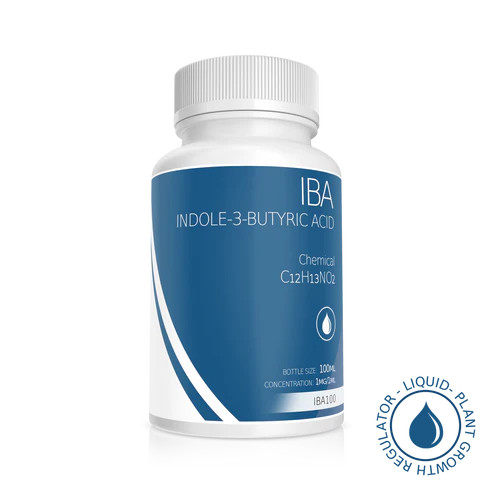
IBA Solution, Sterile : View Product
Ready-to-use sterile liquid format for contamination-sensitive plant tissue culture workflows.
- Catalog: ISL02-100ML
- Concentration: 1 mg/mL
- Size: 100 mL

IBA Solution, Non-Sterile : View Product
Convenient liquid format for protocols where a non-sterile stock solution is suitable.
- Catalog: IBA100
- Concentration: 1 mg/mL
- Size: 100 mL
Frequently asked questions
What is the formula of butyric acid?
=> The molecular formula of butyric acid is C₄H₈O₂. Its condensed structural formula is CH₃CH₂CH₂COOH.
Is butyric acid a fatty acid?
=> Yes. It is a saturated short-chain fatty acid containing four carbon atoms.
Is butyric acid the same as butyrate?
=> Not exactly. Butyric acid is the protonated form, while butyrate is its negatively charged conjugate base. At physiological pH, the butyrate form predominates.
Which bacteria produce butyric acid?
=> Several anaerobic intestinal bacteria can produce it, including species associated with Faecalibacterium, Roseburia, Eubacterium, Anaerobutyricum and Clostridium.
What does Clostridium butyricum produce?
=> Clostridium butyricum ferments carbohydrates and produces butyric acid as an important metabolic end product.
Why does butyric acid smell bad?
=> Free butyric acid is volatile and has an intense odor commonly associated with rancid butter. Some butyrate esters smell very different and may have pleasant fruity aromas.
Is sodium butyrate the same as butyric acid?
=> Sodium butyrate is the sodium salt of butyric acid. It releases butyrate ions when dissolved and is commonly used in laboratory research and commercial formulations.
Is butyrate the same as beta-hydroxybutyrate?
=> No. Butyrate is a four-carbon short-chain fatty acid produced largely by microbial fermentation. Beta-hydroxybutyrate is a ketone body produced mainly by the liver during fasting, carbohydrate restriction or increased fatty-acid oxidation.
Can butyric acid treat inflammatory bowel disease?
=> Butyrate has been investigated as an adjunct in inflammatory bowel disease, but results remain variable. It should not be described as a proven stand-alone treatment or used to replace medical therapy.
Butyric acid is a four-carbon short-chain fatty acid whose conjugate base, butyrate, is an important microbial metabolite in the colon. Intestinal bacteria produce it by fermenting resistant carbohydrates and dietary fiber.
Its best-supported biological role is as a local metabolic substrate for colon epithelial cells. Butyrate also influences gene expression through HDAC inhibition and participates in epithelial and immune signaling. These properties make sodium butyrate a valuable research reagent and butyrate metabolism an important area of microbiome science.
Nevertheless, effects observed in laboratory models do not automatically demonstrate clinical benefit. Statements concerning butyrate supplements, inflammatory disease, cancer or metabolic health should distinguish established biochemical mechanisms from preliminary therapeutic research.