
Serafol ABO+D Bedside Test: Blood Grouping and Transfusion Safety
Serafol ABO+D Bedside Test: Rapid Blood Grouping and Transfusion Safety
Explore the scientific principles behind the Serafol ABO+D bedside blood grouping test, including ABO and RhD antigen detection, red blood cell agglutination, clinical applications, result interpretation, and pre-transfusion safety.
=> The Serafol ABO+D bedside test is a rapid immunohematology card used to check the ABO and RhD blood-group characteristics of a sample near the point of care. Its dried antibody reagents react with corresponding red blood cell antigens through visible agglutination. The test supports an additional pre-transfusion safety check but does not replace formal blood grouping, compatibility testing, or patient identification.
1. What Is the Serafol ABO+D Bedside Test?
The Serafol ABO+D bedside test is a rapid blood grouping card intended for use in pre-transfusion testing workflows. Developed by sifin diagnostics, it supports immediate checking of ABO and RhD blood-group characteristics close to the patient.
The device uses dried monoclonal antibody reagents to demonstrate antigen-antibody reactions on red blood cells. The presence of the corresponding antigen is indicated by visible red blood cell agglutination.
Bedside blood-group checking provides an additional opportunity to identify discrepancies between patient information, expected blood type, and the material being examined before transfusion.
Key Features of Serafol ABO+D
- ABO System : Detection of A and B red blood cell antigens.
- RhD System : Detection of the D antigen using an Anti-D reagent.
- Rapid Readout : Approximately two minutes according to product literature.
The product is particularly relevant to hospital transfusion services, clinical laboratories, blood banks, and authorized healthcare personnel involved in transfusion safety.
2. The Scientific Principle of ABO and RhD Blood Grouping
Human erythrocytes, commonly called red blood cells, express numerous surface antigens. Among the most clinically important are antigens belonging to the ABO and Rh blood-group systems.
The ABO Blood Group System
ABO grouping is based primarily on the presence or absence of A and B carbohydrate antigens on the surface of red blood cells. These antigens define four principal phenotypes: A, B, AB, and O.
| ABO Type | A Antigen | B Antigen | Expected Reaction |
|---|---|---|---|
| A | Present | Absent | Anti-A positive |
| B | Absent | Present | Anti-B positive |
| AB | Present | Present | Both positive |
| O | Absent | Absent | Both negative |
The RhD Blood Group System
The Rh blood-group system contains multiple antigens. The D antigen is particularly important in transfusion medicine and obstetric immunohematology because it can stimulate clinically significant alloimmune responses.
An Anti-D reagent can help determine whether D antigen is detectable on the red blood cells under the test conditions. Weak or variant D expression may require additional investigations under laboratory protocols.
3. How Does the Serafol ABO+D Test Work?
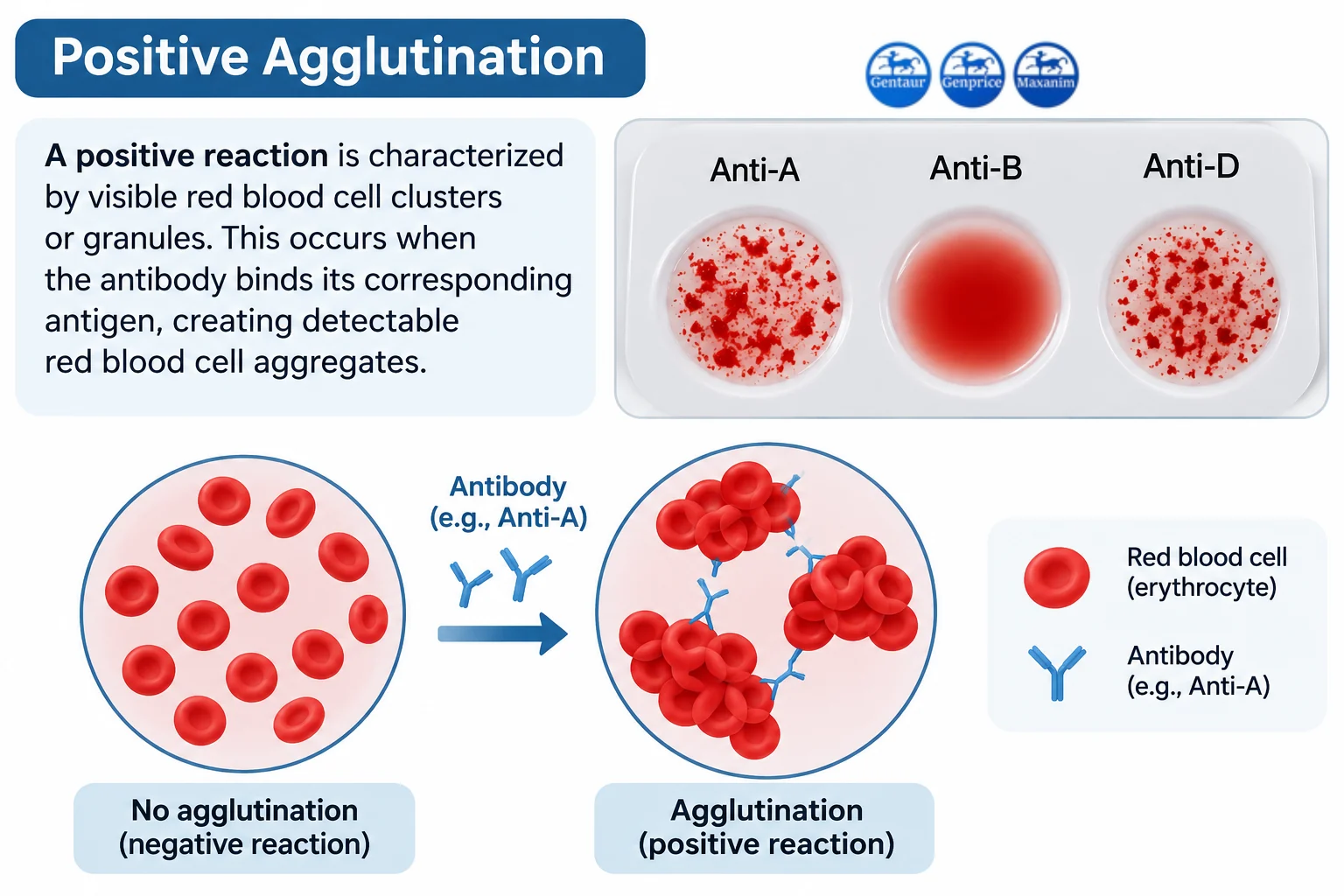
Serafol ABO+D is based on direct hemagglutination, an immunological reaction occurring when specific antibodies bind antigens on red blood cells and cause visible cell clustering.
The test card contains separate reaction areas associated with blood grouping reagents such as Anti-A, Anti-B, and Anti-D, together with an auto-control field.
Positive Agglutination :
Negative Agglutination :
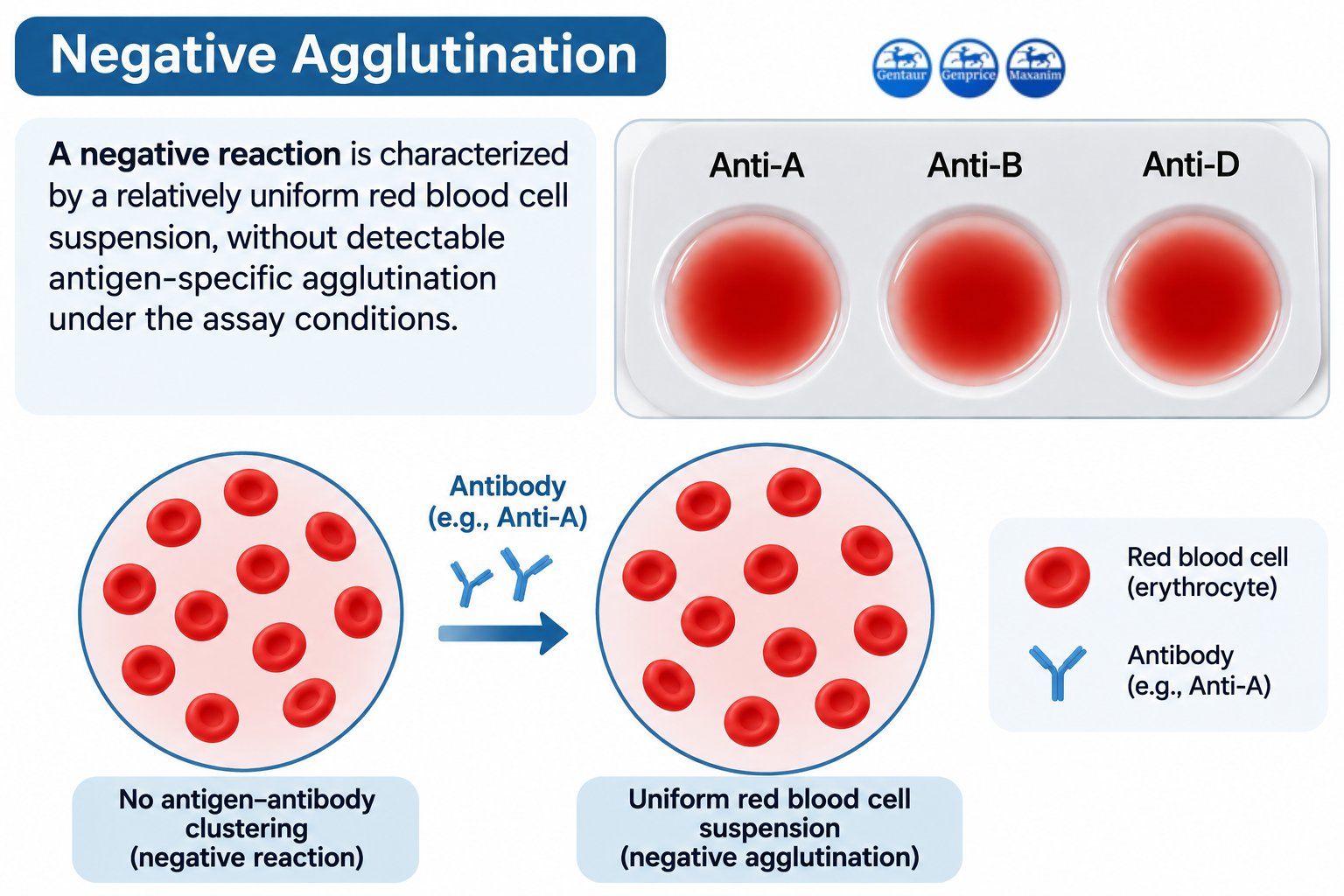
Scientific Interpretation : A positive reaction indicates detectable reactivity with the corresponding blood-group reagent. A negative reaction does not independently exclude all weak, variant, or atypical antigen expressions.
4. Understanding Serafol ABO+D Blood Group Results
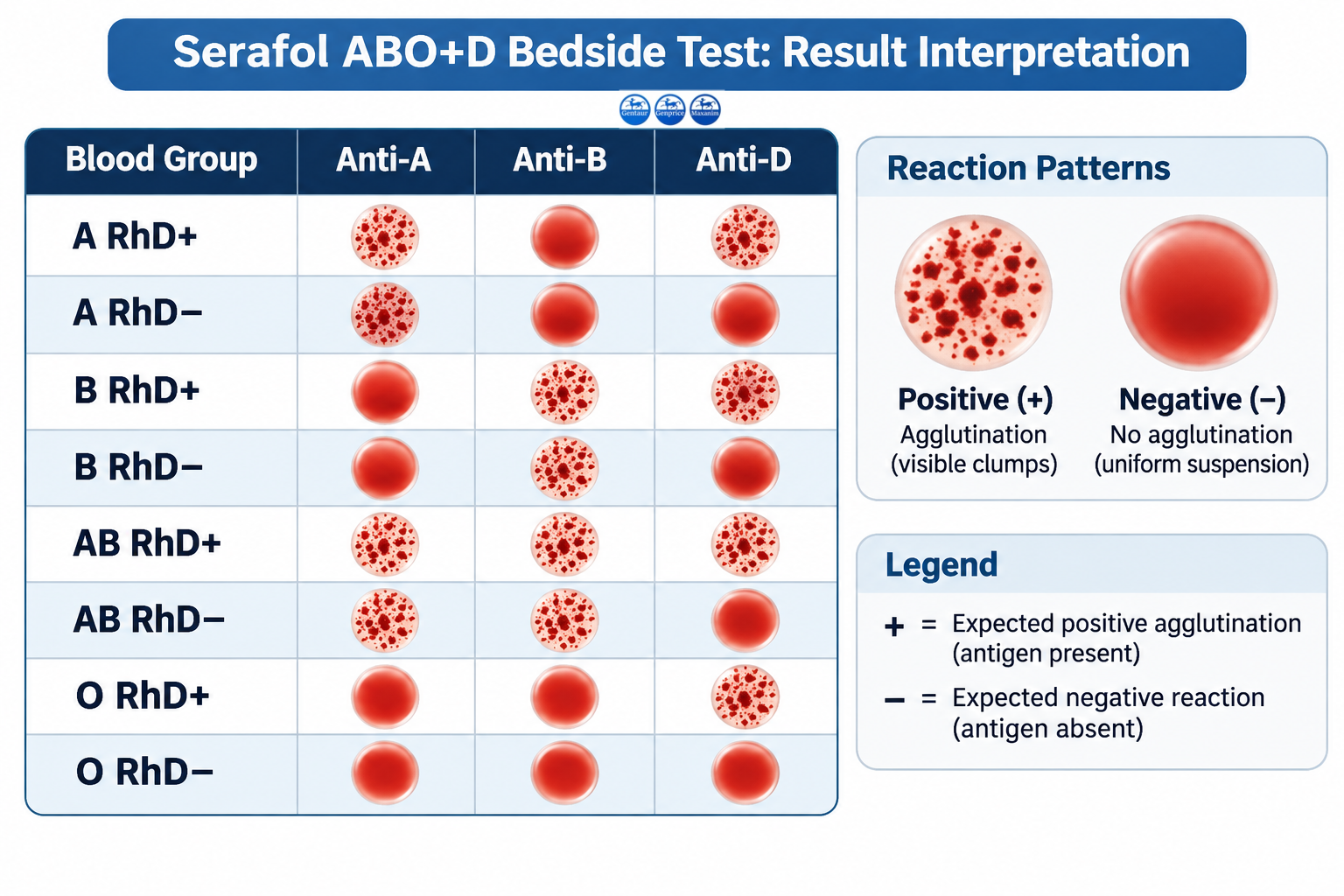
Important : These are simplified theoretical patterns for routine antigen expression, not a standalone diagnostic algorithm. A reactive auto-control, mixed-field result, weak reaction, or discrepancy requires investigation under the applicable laboratory and transfusion-service protocol.
A negative Anti-D field alone must not be treated as definitive classification of every D variant.
5. Why Is Bedside Blood Group Checking Important?
ABO-incompatible red blood cell transfusions can trigger acute hemolytic transfusion reactions. Prevention depends on multiple safeguards, including correct patient identification, sample labeling, blood-group determination, compatibility testing, and final bedside checks.
A bedside blood grouping card provides an additional opportunity to recognize a discrepancy immediately before a transfusion begins.
Major Safety Objectives
- Support verification of a patient's ABO group.
- Help identify discrepancies in the expected blood group.
- Support pre-transfusion identity-checking procedures.
- Provide visible antigen-antibody reaction evidence.
- Support traceable documentation of the bedside check.
A bedside card is one component of a broader transfusion safety system. Clinical decisions must follow the institution's approved transfusion procedures.
Clinical Safety Note : The Serafol bedside check must never be used as a substitute for laboratory ABO/RhD typing, antibody screening, required crossmatching, or mandatory patient and blood-component identity checks.
6. Serafol ABO+D Bedside Test: Technical Specifications
The following information describes the Serafol ABO+D product offered through Maxanim.
| Parameter | Information |
|---|---|
| Product | Serafol ABO+D Bedside Test |
| Manufacturer | sifin diagnostics GmbH |
| Maxanim SKU | 133542 |
| EAN / UPC | 4250369400027 |
| Format | Bedside blood grouping card |
| Blood-group systems | ABO and RhD |
| Detection method | Hemagglutination |
| Pack size | 50 double cards |
| Readout time | Approximately 2 minutes |
| Storage | Room temperature, up to 25°C |
| Documentation | Archivable with suitable cover foil |
The manufacturer documentation should be consulted for the exact variant, reagent composition, validated conditions, expiry date, and instructions applicable to the supplied batch.
Explore the Serafol ABO+D Bedside Test
Discover the product specifications, packaging, and purchasing information available through Maxanim.
7. How Is Serafol Used in a Clinical Workflow?
Serafol ABO+D is intended for use by trained personnel within an institution's authorized bedside pre-transfusion checking procedure.
At a conceptual level, the workflow involves confirming the patient's identity, preparing the designated reaction fields, combining the appropriate blood specimen with the dried reagent, and observing the resulting agglutination pattern.
The manufacturer's literature describes reaction development through mixing and controlled movement of the card, with a readout available in approximately two minutes.
Critical Quality Considerations
- Correct identification of the patient and specimen.
- Use of a valid, unexpired test card.
- Prevention of cross-contamination between reaction areas.
- Interpretation of the complete reaction pattern.
- Investigation of unexpected or ambiguous reactions.
- Documentation according to institutional procedures.
Clinical-Use Reminder: This article explains the principle of the test. It is not an operating instruction or clinical training document. Always follow the current manufacturer instructions for use (IFU) and locally approved transfusion procedures.
8. Factors That Can Affect Bedside Blood Group Testing
Hemagglutination assays can be affected by biological and technical variables. Understanding these factors is essential when interpreting an unexpected reaction.
Weak or Variant Antigen Expression
Certain ABO subgroups and RhD variants may produce weaker-than-expected reactions. Specialized immunohematology testing may be required to resolve these findings.
Autoagglutination and Nonspecific Reactions
Cold-reactive antibodies, rouleaux formation, and other nonspecific interactions can complicate interpretation. The Serafol auto-control field is intended to help identify possible non-antigen-specific reactivity.
Mixed Red Blood Cell Populations
Mixed-field reactions may arise in complex clinical circumstances, including some recently transfused patients or individuals with mixed red blood cell populations.
Pre-analytical and Procedural Factors
Incorrect specimen identification, inadequate reagent reconstitution, or inappropriate interpretation may compromise the reliability of the bedside check.
Important: Any unexplained discrepancy must be referred to the transfusion laboratory and resolved according to institutional policy before relying on the result for clinical decisions.
9. Serafol ABO+D Versus Laboratory Blood Grouping
Bedside testing and laboratory immunohematology address related but distinct safety objectives.
| Feature | Serafol ABO+D | Laboratory Testing |
|---|---|---|
| Main role | Additional bedside blood-group check | Formal immunohematology assessment |
| Location | Near the patient | Transfusion laboratory |
| Technology | Card hemagglutination | Validated serological or automated methods |
| ABO/RhD assessment | Rapid check | Comprehensive validated testing |
| Antibody screen | Not provided | Performed as required |
| Crossmatch | Not provided | Performed or assessed as required |
Combining standardized laboratory procedures with robust bedside identity verification helps create multiple independent safeguards against avoidable transfusion errors.
10. Frequently Asked Questions About Serafol ABO+D
What is a Serafol test?
Serafol is a bedside blood grouping card designed to check ABO blood-group characteristics and, in the ABO+D version, RhD antigen reactivity through visible red blood cell agglutination.
How quickly does Serafol ABO+D provide results?
Manufacturer and product literature describe a readout in approximately two minutes when used according to the validated instructions.
Can Serafol ABO+D determine Rh-positive or Rh-negative status?
The Anti-D field helps detect D-antigen reactivity. Weak or variant D expression may require additional laboratory investigations before a definitive RhD classification is established.
Does Serafol replace crossmatching?
No. Serafol is an additional bedside check. It does not replace laboratory blood grouping, antibody screening, or the required compatibility testing before transfusion.
What is the principle of the Serafol test?
The test is based on hemagglutination. Monoclonal antibodies react with matching red blood cell antigens, producing visible cell aggregation when a positive reaction occurs.
How many Serafol ABO+D cards are included in a pack?
The Maxanim listing specifies a pack of 50 double test cards for the Serafol ABO+D product, SKU 133542.
Scientific and Technical References
- sifin diagnostics GmbH. Serafol Blood Grouping and Bedside Cards: Technical Product Literature.
- Médecins Sans Frontières. Bedside Control Card, ABO Compatibility.
- Bio-Rad. Transfusion Products Catalog: Bedside Testing and Serafol Cards.
- Maxanim. Serafol ABO+D Bedside Test: Product Specifications.
Conclusion
Serafol ABO+D illustrates the application of antigen-antibody agglutination to a rapid bedside blood-group check. Its clinical value lies in supporting an additional safeguard within a comprehensive transfusion safety system, not in replacing laboratory testing.